TLILIC3017 – Licence to drive a heavy combination vehicle

TLILIC3017 – Licence to drive a heavy combination vehicle

This unit involves the skills and knowledge required to obtain a licence to drive a heavy combination vehicle. It includes systematically and efficiently controlling all vehicle functions, monitoring traffic and road conditions, managing vehicle condition and performance, coupling and uncoupling of trailer, and effectively managing hazardous situations.

A heavy combination vehicles includes:

a prime mover with a minimum of three axles and a semi-trailer with a minimum of two axles – vehicle must have a GCM rating of at least 24 tonnes or
a heavy rigid vehicle towing a trailer – trailer must have at least two axles and a GVM of 12 tonnes or more.
Assessment of this unit will be undertaken within a licensing examination conducted by, or under the authority of, the relevant state/territory driver licensing authority.

This unit applies to driving that is carried out in accordance with relevant state/territory driver licensing authority licence requirements and regulations for heavy combination vehicles.

Driving is performed with limited or minimum supervision, and with limited accountability and responsibility for self and others in achieving the prescribed outcomes.

Driving involves the application of routine vehicle driving principles and procedures to maintain safety and to operate a heavy combination vehicle across a variety of driving contexts.

The primary legislative requirements applicable to this unit of competency are state/territory legislation in relation to road use and driver licensing.

This unit addresses the knowledge and skills necessary for the granting of a Heavy Combination Driver Licence.

Being awarded this unit of competency is a necessary requirement to obtain a Heavy Combination Driver Licence but is only one of several criteria. Prospective licence applicants should check with the state/territory driver licensing authority for other criteria (such as licence tenure and medical fitness) to confirm other eligibility requirements before undertaking training and/or assessment.

TLILIC2016 – Licence to drive a heavy rigid vehicle

TLILIC2016 – Licence to drive a heavy rigid vehicle

This unit involves the skills and knowledge required to obtain a licence to drive a heavy rigid vehicle. It includes systematically and efficiently controlling all vehicle functions, monitoring traffic and road conditions, managing vehicle condition and performance, and effectively managing hazardous situations.

Heavy rigid vehicle includes:

a rigid vehicle, not being an unladen prime mover, with a minimum of three axles and a minimum 15 tonnes GVM or
a modified three axle prime mover with a certified detachable tray (with capacity to carry 75% of its specified GVM) with a GVM of 15 tonnes and holds dual registration (HC & HR) or
a three axle articulated bus or
a three axle bus above 15 tonnes GVM.
Assessment of this unit will be undertaken within a licensing examination conducted by, or under the authority of, the relevant state/territory driver licensing authority.

This unit applies to driving that is carried out in accordance with relevant state/territory driver licensing authority licence requirements and regulations for heavy rigid vehicles.

Driving is performed with limited or minimum supervision, and with limited accountability and responsibility for self and others in achieving the prescribed outcomes.

Driving involves the application of routine vehicle driving principles and procedures to maintain safety and to operate a heavy rigid vehicle across a variety of driving contexts.

The primary legislative requirements applicable to this unit of competency are state/territory legislation in relation to road use and driver licensing.

This unit addresses the knowledge and skills necessary for the granting of a Heavy Rigid Driver Licence.

Being awarded this unit of competency is a necessary requirement to obtain a Heavy Rigid Driver Licence but is only one of several criteria. Prospective licence applicants should check with the state/territory driver licensing authority for other criteria (such as licence tenure and medical fitness) to confirm other eligibility requirements before undertaking training and/or assessment.

TLILIC2015 – Licence to drive a medium rigid vehicle

TLILIC2015 – Licence to drive a medium rigid vehicle

This unit involves the skills and knowledge required to obtain a licence to drive a medium rigid vehicle. It includes systematically and efficiently controlling all vehicle functions, monitoring traffic and road conditions, managing vehicle condition and performance, and effectively managing hazardous situations.

Types of medium rigid vehicles include:

two axle rigid trucks, not being a prime mover, above 8 tonnes GVM or
a two axle bus above 8 tonnes GVM.
Assessment of this unit will be undertaken within a licensing examination conducted by, or under the authority of, the relevant state/territory driver licensing authority.

This unit applies to driving that is carried out in accordance with relevant state/territory driver licensing authority licence requirements and regulations for medium rigid vehicles.

Driving is performed with limited or minimum supervision, and with limited accountability and responsibility for self and others in achieving the prescribed outcomes.

Driving involves the application of routine vehicle driving principles and procedures to maintain safety and to operate a medium rigid vehicle across a variety of driving contexts.

The primary legislative requirements applicable to this unit of competency are state/territory legislation in relation to road use and driver licensing.

This unit addresses the knowledge and skills necessary for the granting of a Medium Rigid Driver Licence.

Being awarded this unit of competency is a necessary requirement to obtain a Medium Rigid Driver Licence but is only one of several criteria. Prospective licence applicants should check with the state/territory driver licensing authority for other criteria (such as licence tenure and medical fitness) to confirm other eligibility requirements before undertaking training and/or assessment.

TLILIC2014 – Licence to drive a light rigid vehicle

TLILIC2014 – Licence to drive a light rigid vehicle

This unit involves the skills and knowledge required to obtain a licence to drive a light rigid vehicle. It includes systematically and efficiently controlling all vehicle functions, monitoring traffic and road conditions, managing vehicle condition and performance, and effectively managing hazardous situations.

Types of light rigid vehicles include:

a rigid truck above 4.5 tonnes GVM but less than or equal to 8 tonnes GVM or
a rigid bus with less than or equal to 8 tonnes GVM or seats more than 12 adults, including the driver.
Assessment of this unit will be undertaken within a licensing examination conducted by, or under the authority of, the relevant state/territory driver licensing authority.

This unit applies to driving that is carried out in accordance with relevant state/territory driver licensing authority licence requirements and regulations for light rigid vehicles.

Driving is performed with limited or minimum supervision, and with limited accountability and responsibility for self and others in achieving the prescribed outcomes.

Driving involves the application of routine vehicle driving principles and procedures to maintain safety and to operate a light rigid vehicle across a variety of driving contexts.

The primary legislative requirements applicable to this unit of competency are state/territory legislation in relation to road use and driver licensing.

This unit addresses the knowledge and skills necessary for the granting of a Light Rigid Driver Licence.

Being awarded this unit of competency is a necessary requirement to obtain a Light Rigid Driver Licence but is only one of several criteria. Prospective licence applicant

Standard 11 Skill Set

Standard 11 Skill Set

A view of a quarry site with a distant skyline in the background, showing urban development near an extraction site

This unit describes the skills and knowledge required to communicate in the workplace in the resources and infrastructure industries and other industries with relevant work practices and procedures. It applies to those working in operational roles. They generally work under supervision to undertake a prescribed range of functions involving known routines and procedures and take some responsibility for the quality of own work outcomes.

RIIHAN301E – Operate elevating work platform (For scissor Lifts of all sizes and Booms Under 11m)

RIIHAN301E – Operate elevating work platform (For scissor Lifts of all sizes and Booms Under 11m)

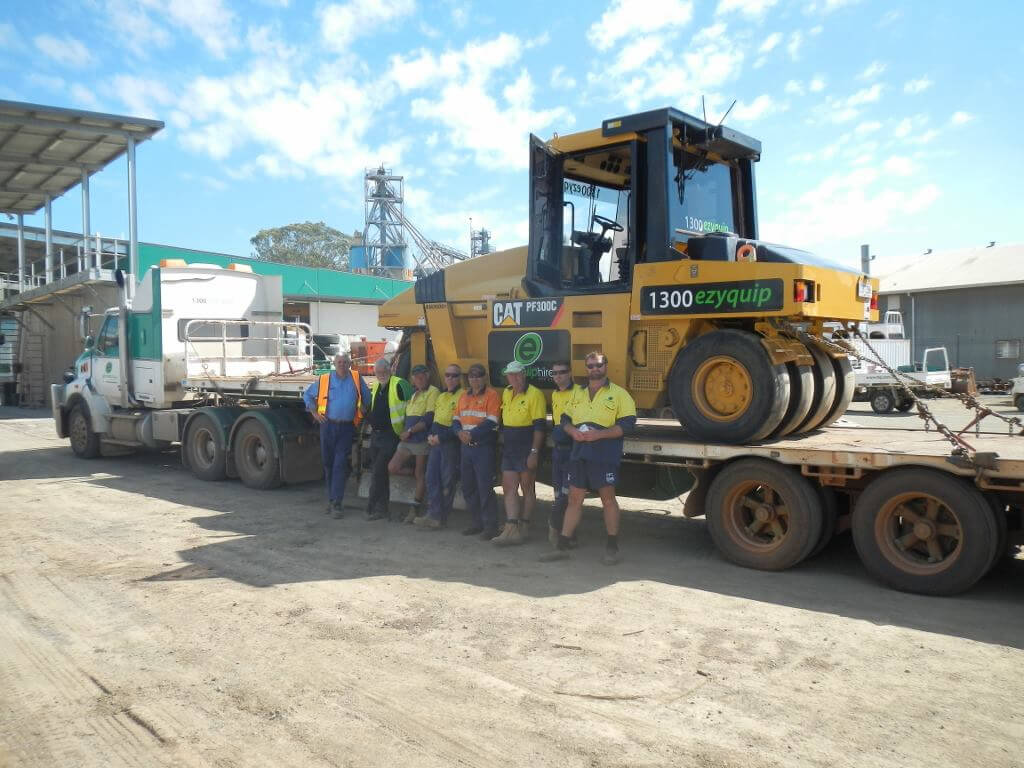
A group of workers standing next to a low-loader carrying a Caterpillar compactor, representing teamwork in machinery logistics

This unit describes the skills and knowledge required to operate an elevating work platform at any height.

This unit applies to those working in operational roles.

The work required in this unit relates to the National Standard for High Risk Work but this unit does not provide the licence. Licensing, legislative, regulatory or certification requirements that may apply to this unit can vary between states, territories and industry sectors, and must be sourced prior to applying this unit.

This unit alone does not provide sufficient skill to independently load and unload equipment. To perform this activity safely, personnel must either complete or be assisted by someone who has completed RIIHAN308F Load and Unload Plant or equivalent.

RIIHAN308F – Load and unload plant

RIIHAN308F – Load and unload plant

A group of workers standing next to a low-loader carrying a Caterpillar compactor, representing teamwork in machinery logistics

This unit describes the skills and knowledge required to load and unload plant.

This unit applies to those working in site-based roles.

Prior to performing this activity, skills and knowledge should be developed for the individual plant. This can be achieved through completing the equivalent operator unit or being assisted by someone who has this knowledge. Refer to the Implementation Guide for further details.

Licensing, legislative, regulatory and certification requirements that apply to this unit can vary between states, territories and industry sectors, and must be sourced from state jurisdictions prior to applying this unit.

RIIHAN201E – Operate A Forklift

RIIHAN201E – Operate A Forklift

A worker operating a red forklift moving bundled concrete posts at a construction site

This unit describes the skills and knowledge required to operate a forklift to shift, lift, transfer and place loads. It includes using forklift attachments safely and effectively.

This unit applies to those working in site-based roles.

The work required in this unit relates to the National Standard for High Risk Work but this unit does not provide the licence. Licensing, legislative, regulatory or certification requirements that may apply to this unit can vary between states, territories and industry sectors, and must be sourced from state jurisdictions prior to applying this unit.

RIIHAN307E – Operate a Vehicle Loading Crane (VLC)

RIIHAN307E – Operate a Vehicle Loading Crane (VLC)

TLILIC0024 - Licence to operate a vehicle loading crane (10 metre tonnes and above) - Prime Training Services

This unit describes the skills and knowledge required to operate, maintain and shift loads using a vehicle loading crane.

This unit applies to those working in site-based roles.

The work required in this unit relates to the National Standard for High Risk Work but this unit does not provide the licence. Licensing, legislative, regulatory or certification requirements that may apply to this unit can vary between states, territories, and industry sectors, and must be sourced from relevant state jurisdictions prior to applying this unit.

RIIHAN305D – Operate a Gantry or Overhead Crane

RIIHAN305D – Operate a Gantry or Overhead Crane

Workers in high-vis clothing using an overhead crane to lift a heavy industrial component inside a workshop

This unit describes a participant’s skills and knowledge required to operate a gantry or overhead crane, including planning and preparing and performing operational servicing.

This unit is appropriate for those working in site-based roles.

The work required in this unit relates to the National Standard for High Risk Work but this unit does not provide the licence. Licensing, legislative, regulatory and certification requirements that apply to this unit can vary between states, territories and industry sectors, and must be sourced prior to application of the unit.